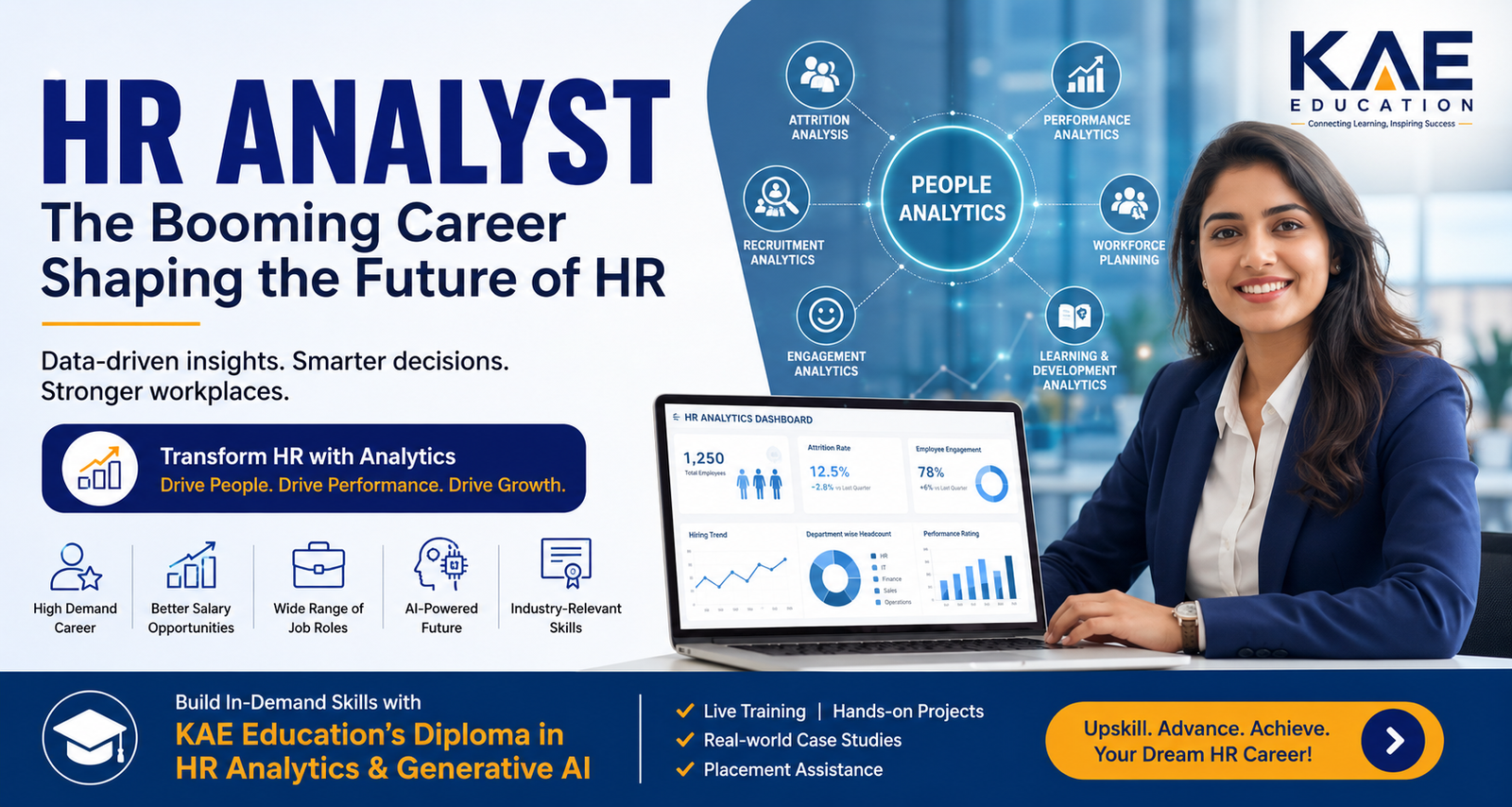
In today’s fast-changing corporate world, Human Resources is no longer limited to hiring employees and managing payroll. Companies are now relying heavily on data-driven decision-making to improve employee performance, reduce attrition, increase productivity, and build stronger workplaces. This transformation has given rise to one of the fastest-growing career opportunities in the HR industry — HR Analytics.
For HR professionals who want to stay relevant, future-ready, and highly valued in the job market, HR Analytics has become a game-changing skill.
What is HR Analytics?
HR Analytics, also known as People Analytics or Workforce Analytics, is the process of collecting, analyzing, and interpreting employee-related data to make smarter HR decisions.
Instead of relying only on assumptions or traditional HR practices, organizations now use analytics to answer important questions such as:
- Why are employees leaving the company?
- Which candidates are most likely to perform well?
- How can employee engagement be improved?
- What skills will the workforce need in the future?
- Which training programs provide the best ROI?
By using tools like Excel, Power BI, Tableau, SQL, Python, and AI-based technologies, HR professionals can generate meaningful insights that directly impact business growth.
Why HR Analytics Has Become a Booming Career
The demand for HR Analytics professionals has increased rapidly across industries including IT, Banking, Healthcare, Manufacturing, Retail, Consulting, EdTech, and Startups.
Here are some major reasons behind this boom:
1. Companies Are Becoming Data-Driven
Organizations today want measurable results from every department, including HR. Businesses now expect HR teams to support strategic decisions through real-time data and predictive insights.
2. Talent Retention is a Big Challenge
Employee attrition has become one of the biggest concerns for companies worldwide. HR Analytics helps organizations identify patterns behind resignations and improve employee satisfaction.
3. AI and Automation Are Changing HR
Modern HR functions are increasingly integrated with Artificial Intelligence and automation tools. HR professionals who understand analytics and Generative AI have a strong competitive advantage.
4. High Demand, Limited Skilled Professionals
Although demand is increasing, there is still a shortage of skilled HR Analytics professionals. This creates excellent salary opportunities and faster career growth.
5. Better Career Opportunities for HR Professionals
Traditional HR roles are evolving. Professionals with analytics expertise often move into higher-paying roles such as:
- HR Analyst
- People Analytics Specialist
- Workforce Planning Analyst
- HR Data Consultant
- Talent Analytics Manager
- HR Business Partner
- Strategic HR Consultant
Job Opportunities in HR Analytics
Today, companies across India and globally are actively hiring HR professionals with analytical skills.
Some of the industries hiring HR Analysts include:
- IT & Software Companies
- MNCs
- Consulting Firms
- BFSI Sector
- Healthcare Organizations
- E-commerce Companies
- Manufacturing Industries
- Startups & Unicorns
Professionals with HR Analytics skills often receive better salaries compared to traditional HR roles because they contribute directly to business strategy.
Even freshers and working HR executives can transition into this field with the right training and practical exposure.
Skills Required to Become an HR Analyst
To build a successful career in HR Analytics, professionals should learn:
- Advanced Excel
- HR Metrics & KPIs
- Power BI / Tableau
- SQL Basics
- Data Visualization
- Predictive Analytics
- Generative AI Applications in HR
- Recruitment Analytics
- Attrition Analysis
- Performance Analytics
- Dashboard Building
The good news is that these skills can be learned even by non-technical HR professionals through structured practical training.
How KAE Education Helps HR Professionals Build a Successful Career
KAE Education has designed an industry-oriented diploma program to help HR professionals transform their careers and become future-ready.
The Advanced Diploma in HR Analytics & Generative AI is specially created for:
- HR Executives
- Recruiters
- MBA HR Students
- Working Professionals
- Career Switchers
- Fresh Graduates
Highlights of the Program
- Live Instructor-Led Training
- Industry-Relevant Curriculum
- Hands-on Projects
- Generative AI Integration
- Dashboard & Analytics Training
- Placement Assistance
- Mock Interviews & Soft Skills Sessions
- Real-World Case Studies
The course focuses not only on theory but also on practical implementation, helping learners gain confidence to work on real HR Analytics projects.
Why This Course Can Change Careers
Many HR professionals struggle with limited growth, repetitive work, and salary stagnation. HR Analytics opens doors to strategic and high-impact roles within organizations.
By upgrading their skills through KAE Education’s diploma course, professionals can:
- Improve their employability
- Increase salary potential
- Move into strategic HR roles
- Work with modern HR technologies
- Become future-ready professionals
- Stand out in competitive job markets
In a world where businesses are becoming increasingly data-centric, HR professionals who understand analytics will lead the future of Human Resources.
Final Thoughts
HR Analytics is no longer just an optional skill — it is becoming a necessity for modern HR professionals. As organizations continue to invest in data, AI, and workforce intelligence, the demand for skilled HR Analysts will continue to rise.
For professionals who want to grow faster, earn better salaries, and build a future-proof career, this is the perfect time to enter the world of HR Analytics.
With practical training, industry exposure, and placement support, KAE Education is helping aspiring HR professionals turn their career dreams into reality through its specialized diploma program in HR Analytics & Generative AI.