Artificial Intelligence (AI) has transformed from a futuristic concept into a Technology that touches almost every aspect of our daily lives. From chatbots that answer our queries to algorithms that recommend movies, AI is becoming smarter with each passing day. But the question remains: Can Artificial Intelligence truly think like a human brain?
While AI has made extraordinary progress, it still operates fundamentally differently from the Human mind. Knowing these distinctions enables us to appreciate both the potential and constraints of Artificial intelligence in simulating human thought.
The Human Brain vs. Artificial Intelligence: A Core Comparison
The Human brain is a complex biological organ capable of creativity, emotional reasoning, and abstract thought. It processes sensory data, learns from experience, and adapts to unpredictable situations.
Artificial Intelligence, on the other hand, is built on algorithms, statistical models, and computational processing. It can analyze vast amounts of data quickly, identify patterns, and perform tasks with precision — but it lacks self-awareness and emotions.
While AI can outperform Humans in speed and data analysis, it cannot yet replicate the depth of Human consciousness or empathy.
How Artificial Intelligence Mimics Human Thinking
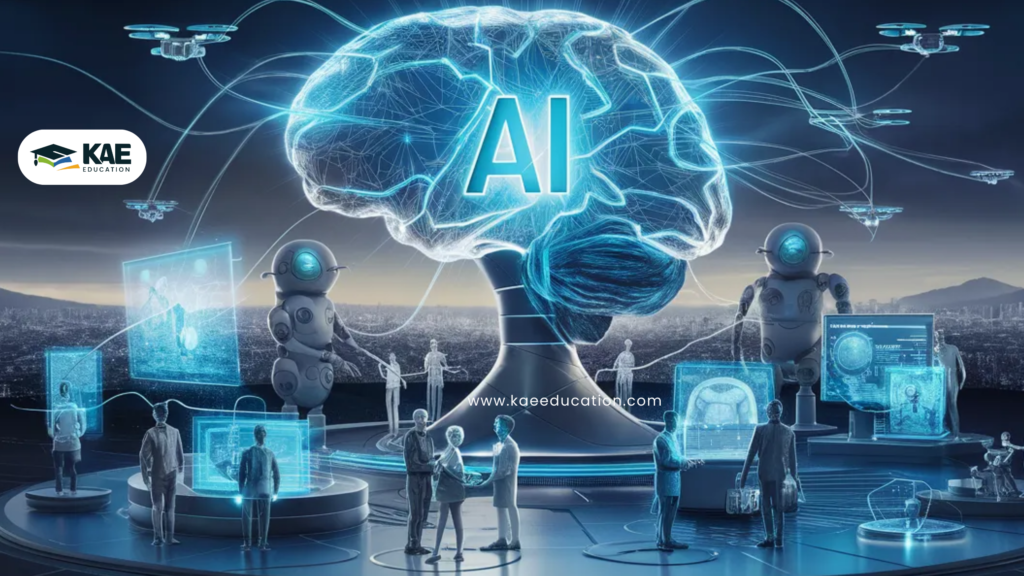
(i) Neural Networks – Inspired by the Human brain’s neural structure, AI uses Artificial neural networks to process information in layers, making decisions similar to how neurons fire in the brain.
(ii) Machine Learning – AI learns from data and improves over time, much like how Humans learn from experience.
(iii) Natural Language Processing (NLP) – This allows AI to understand and respond to Human language, enabling more natural interactions.
(iv) Decision-Making Algorithms – AI can evaluate choices and predict outcomes using probability models, mimicking human reasoning patterns.
The Limits of AI’s Cognitive Abilities
Despite these similarities, AI thinking is limited by:
(i) Lack of Emotion: AI cannot feel or understand emotions genuinely.
(ii) No Consciousness: AI lacks consciousness and life experience.
(iii) Dependency on Data: AI learns only from the data it is given, unlike humans who can imagine and hypothesize.
Future Possibilities of AI Thinking
Researchers are working on Artificial General Intelligence (AGI) — a type of AI that could match Human cognitive abilities across multiple domains. While AGI could potentially think like Humans, Ethical concerns and technological hurdles mean it may still be decades away.
Conclusion
Artificial Intelligence has come remarkably close to replicating certain aspects of Human thought, such as learning, reasoning, and problem-solving. However, it lacks consciousness, emotional intelligence, and the creative spark that define human thinking. The future may bring breakthroughs, but for now, AI remains a powerful tool — not a Human brain replacement.