In today’s AI-driven era, Computer vision is revolutionizing Industries by enabling Machines to “see” and interpret the world in real time. From self-driving cars to Healthcare Diagnostics, the ability to process and analyze visual data instantly is transforming the way technology interacts with our surroundings. But how does Advanced Computer Vision achieve such remarkable speed and accuracy? Let’s break it down.
Understanding Computer Vision
A branch of Artificial intelligence called Computer vision teaches machines to process and interpret visual information from their environment in the same way that people do. Using cameras, sensors, and advanced algorithms, these systems can detect objects, recognize patterns, and even make decisions based on what they “see.”
In real-time applications, the challenge is not only accuracy but also speed—processing vast amounts of visual data within milliseconds to enable instant actions.
Key Technologies Powering Real-Time Computer Vision
(i) High-Performance Cameras & Sensors
Real-time systems rely on high-speed image capture to feed accurate data into AI models.
(ii) Deep Learning Models
The foundation of Computer vision is made up of transformers and Convolutional Neural Networks (CNNs), which allow for quick pattern detection.
(iii) Edge Computing
Processing data directly on devices rather than sending it to the cloud reduces latency, making instant decision-making possible.
(iv) GPU Acceleration
Graphics Processing Units allow AI models to process thousands of visual frames per second.
Applications of Real-Time Computer Vision
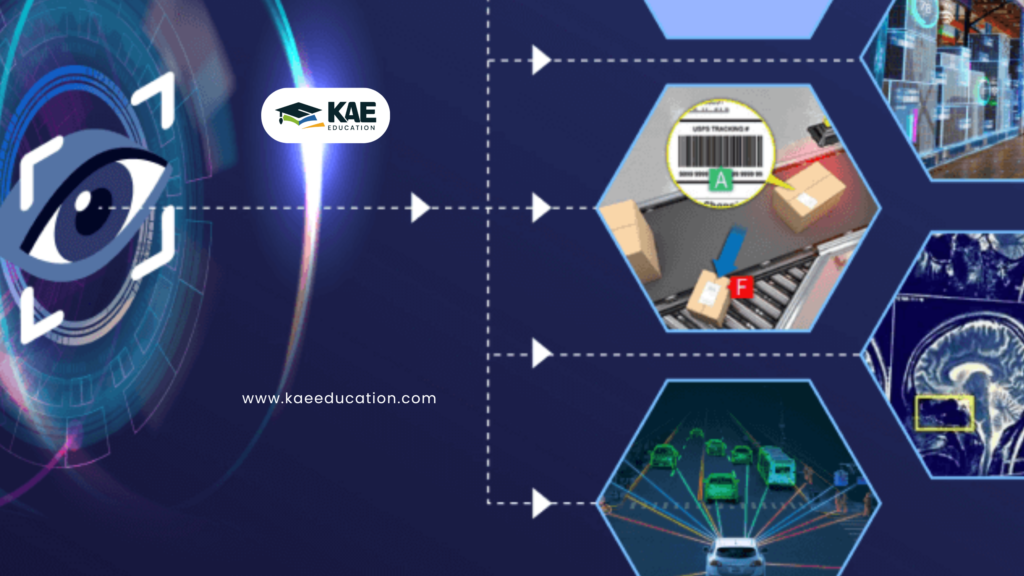
(i) Autonomous Vehicles – Detecting pedestrians, vehicles, and obstacles instantly.
(ii) Healthcare – Real-time medical imaging for faster diagnosis.
(iii) Retail – Automated checkout systems and customer behavior tracking.
(iv) Manufacturing – Quality control and defect detection without halting production.
(v) Security – Instant facial recognition and threat detection.
Challenges in Real-Time Computer Vision
Even with advanced algorithms, real-time Computer vision faces challenges:
(i) Processing large data volumes quickly without compromising accuracy.
(ii) Handling different lighting, angles, and environmental conditions.
(iii) Balancing computational cost with performance.
The Future of Real-Time Computer Vision
With advancements in AI Hardware, 5G Networks, and better Machine learning models, real-time Computer vision will become faster, more accurate, and widely accessible. Soon, we may see it integrated into everyday devices, from Smartphones to Household robots.